Unified intelligence
Signals from demand, inventory, usage, and pricing are connected into a shared foundation.

AI-powered aftermarket OS
PartsPulse connects availability, pricing, and customer behavior into one unified system; giving parts teams the clarity to act faster and with confidence.
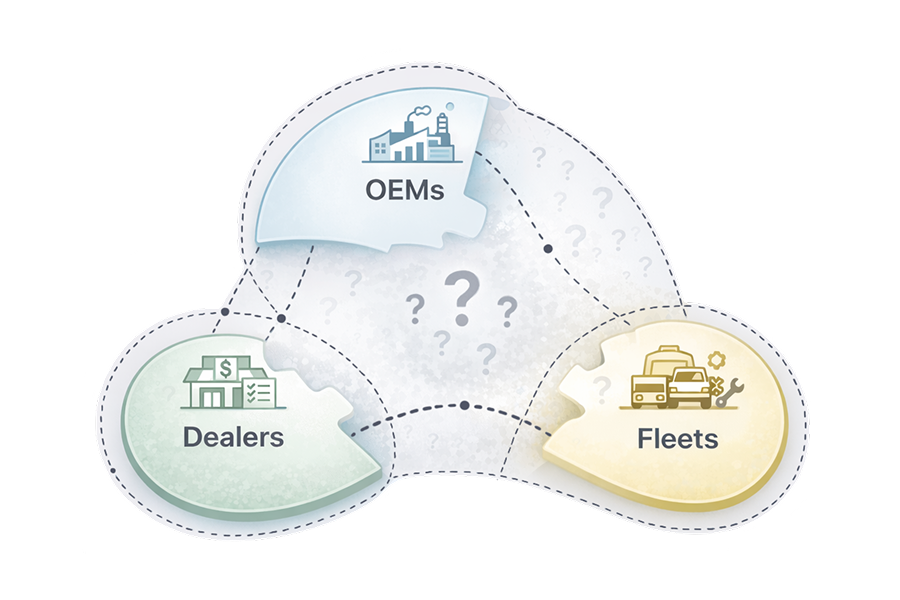
OEMs see production and pricing.
Dealers see inventory and local demand.
Fleets see what fails in the field.
If a part isn't available, it can't be sold; and neither can the service that depends on it.
Cost-plus pricing is simple, but it rarely reflects what customers are actually willing to pay.
Subtle changes in buying behavior often signal risk or opportunity; hard to see until it's too late.
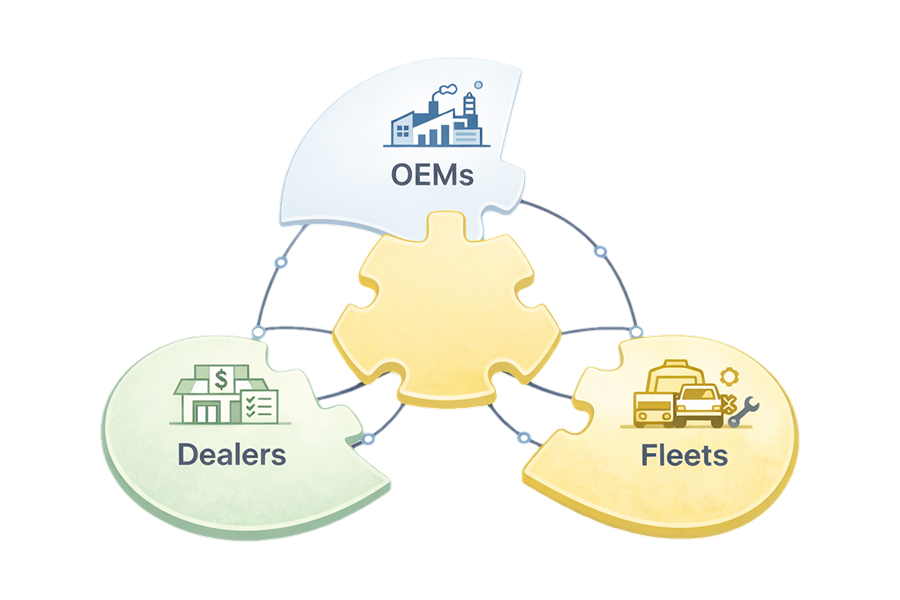
Learning patterns across markets, locations, and time is not something humans and traditional software can detect on their own.
It uses AI to connect demand signals, behavioral patterns, inventory data, pricing, and real-world usage into a single shared view.
Early visibility into cross-sell opportunities, emerging risk, and changing customer needs.
Instead of endless dashboards, teams see what requires attention now.
A calmer, more predictable parts business; where leaders can manage the full system in as little as 30 minutes a day.